
HP ProBook 440 G4
Don't like the alternatives?
Choose from the full offer
HP ProBook 440 G4
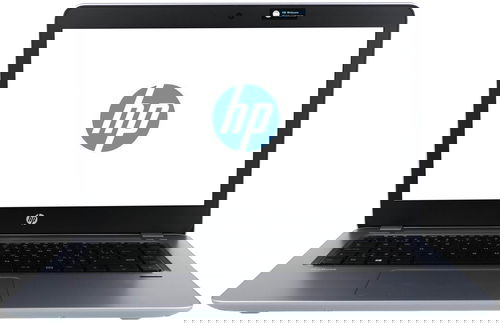
The HP ProBook 440 G4 is designed for professional use. It features high performance, reliability, and precise security. The ProBook series is designed for those who frequently travel for business, as the top cover is made of brushed aluminium that reinforces the case. The notebook comes with preinstalled Windows 10 Pro.
Key features of the HP ProBook 440 G4 notebook
- Durable aluminium construction
- Intel's latest Kaby Lake architecture
- Anti-reflection display with Full HD resolution
- A fast 256GB solid state drive
- Ergonomic backlit keyboard
- Security with Fingerprint Reader and Kensington Lock
- Fast WiFi 802 standard.11ac
High performance in HP notebook body
Inside the notebook, the powerful Intel Core i7 7500U processor Kaby Lake has a power consumption of no more than 15W. Despite the low energy intensity, the processor runs at high frequencies of up to 3.5GHz. With Hyper-Threading technology, two cores can handle up to four threads simultaneously. The NVIDIA GeForce 930MX Dedicated Graphics with surprising performance and its own 2GB of memory takes care of all multimedia content including smooth 4K video game play. The perfectly sharp image comes to you on a 14" Full HD display with anti-reflection finish.
Top-of-the-line equipment with a fast SSD
The ergonomic keyboard can handle a long life of tyipng and protects the inside of the notebook against partial spillage through the cracks. You store your data on a 256GB high-speed SSD and M.2. To connect other peripherals you get the HDMI audio interface and three USB ports, two of which are in high-speed version 3.0. Also included is security with a fingerprint reader and a Kensington lock.
Specifications
Display
Processor
Memory
Graphics card
GPU series/model
Operating system
Hard drive
Equipment
Battery
Weight
Interface
Dimensions
Keyboard layout
Product series
| Code: | HPBN1012g7h |
| Links: | Producer's Website: |
| Manufacturer information |
HP Inc Czech Republic s.r.o Za Brumlovkou 5/1559 140 00 Praha 4 VAT ID: CZ 03208427 Radek Mattas, [email protected]" GO Europe GmbH, Zum Kraftwerk 1, Hattingen 45527, Germany, +49232468010, [email protected] Hewlett-Packard was founded in the difficult times of the Great Depression. The founders were a pair of friends whose name the company still proudly bears. They started their business in an unobtrusive garage near the city of Palo Alto. It is now a national monument. HP’s success lay not in copying existing products, but in the ability and courage to come up with something new. The first commercial triumph was an oscillator that surpassed all competition in quality, yet sold at a quarter of the price. In 1968, HP released their first desktop computer - a desktop calculator. The company currently manufactures products primarily related to computer technology - computers and laptops, printers, scanners, digital cameras, servers, and last but not least, calculators. 
|