HUMANOID ROBOT
Unitree H2
The design of this humanoid robot redefines industrial aesthetics with its aerodynamic elegance.
More information
HUMANOID ROBOT
The design of this humanoid robot redefines industrial aesthetics with its aerodynamic elegance.
HUMANOID ROBOT
A compact humanoid agent for AI research, development and testing in real-world environments.
HUMANOID ROBOT
Agility and intelligence blurring the boundaries between futuristic vision and practical reality.
ROBOT DOG
Designed for demanding missions in difficult terrain, featuring a 25kg payload capacity, swappable batteries and advanced AI navigation.
ROBOT DOG
An intelligent robot combining artificial intelligence, agility and technology for research and entertainment.
ROBOT DOG
Dynamic movement powered by artificial intelligence that perceives the world in context.
ROBOT DOG
Maximum speed. Extreme payload capacity. Continuous operation. The pinnacle of quadruped robot evolution.
What is a humanoid robot?
A humanoid robot is designed to resemble the human body in its structure and movement. It typically features two legs, two arms, a torso, and a head, and is capable of performing human-like movements such as walking, manipulating objects, or interacting with people. Humanoid robots are primarily used in robotics and artificial intelligence research, autonomous systems development, industry, logistics, as well as in education and technology demonstrations.
What is a quadrupedal robot?
A quadrupedal robot is a robot that moves on four legs. Its design is inspired by animals like dogs or cats, allowing it to walk stably even in challenging terrain. Compared to humanoid robots, quadrupedal robots are often more stable when navigating uneven environments. They are used for tasks such as inspections, security applications, terrain exploration, or industrial monitoring.
What is the difference between EDU versions and other robot versions?
The EDU (Education / Research) designation is used for robot versions designed for research, development, and education. These versions feature an open SDK (Software Development Kit) and allow access to low-level robot control, sensors, and motion functions. This makes it possible to program the robot, develop custom algorithms, or integrate it into research projects. If you plan to use the robot for research, development, or experimentation, you must choose the EDU variant.
What is the difference between the Unitree G1 versions (U1–U6)?
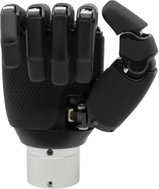
The Unitree G1 models differ primarily in their degrees of freedom and the type of robotic hands.
Why should I get a robot?
Robotics and autonomous systems are among the fastest-growing technological fields today. Organisations that start working with robotics now gain valuable know-how and experience that can bring them a significant competitive advantage in the future. A robot can serve, for example, for research, algorithm development, education, technology demonstrations, or testing new applications.
Which robot should I choose?
The choice of robot depends primarily on your intended use – whether for research, development, demonstrations, teaching, or specific industrial scenarios. If you are unsure, we will gladly help you choose the right model. Contact us at [email protected], ideally stating the purpose for which you plan to use the robot. This will help us recommend the most suitable solution.
Is it possible to program and customise the robots?
Yes. The EDU versions of the robots are designed specifically for development and experimentation. They provide access to the SDK, sensors, and robot motion control. This allows you to create custom applications, implement artificial intelligence algorithms, or integrate the robot into research projects. The robots are often used in conjunction with robotics frameworks such as the Robot Operating System (ROS).
What knowledge is required to work with the robot?
Basic operation of the robot does not require deep robotics expertise. However, more advanced use – such as developing custom applications or algorithms – typically requires programming experience (most commonly Python or C++) and a basic understanding of robotics or artificial intelligence. Therefore, these robots are frequently used in universities, research institutions, or development teams within technology companies.
What are humanoid and quadrupedal robots actually used for today?
Currently, they are primarily used for:
Humanoid robots focus mainly on object manipulation and interaction with the environment, while quadrupedal robots are ideal for mobility and inspection tasks.
Are the robots ready for real-world deployment?
The current generation of robots is primarily intended for research, development, and testing of new applications. In some cases, the robots can be used in real-world scenarios, such as for inspections or demonstrations, but most deployments still require further development and customisation to the specific environment.
How does delivery and commissioning of the robot work?
Upon delivery, the robot is ready for basic use. For EDU versions, it is usually necessary to perform a basic configuration of the software environment and potentially install development tools.
Is it possible to try the robot before purchasing?
Yes. For selected models, we offer the option of a short-term paid rental. We also regularly host showcases where you can see the robots in action and discuss potential use cases with us. If you are interested in this option, please email us at [email protected] and we will gladly provide you with the details.