
Flip display
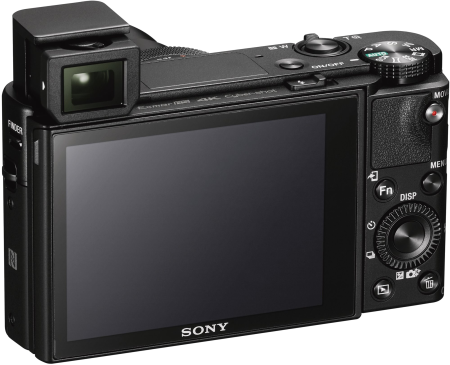
For more versatile control, you can unlock the 2.95" display (which is great for selfies), and use the OLED Tru-Finder viewfinder as a handy viewer for all settings and to immediately review your images.
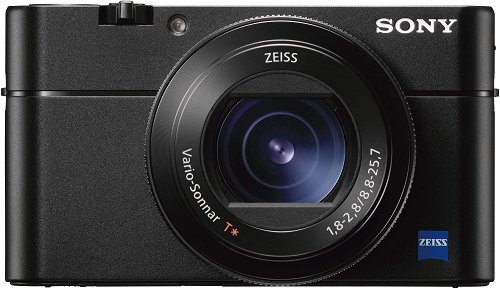
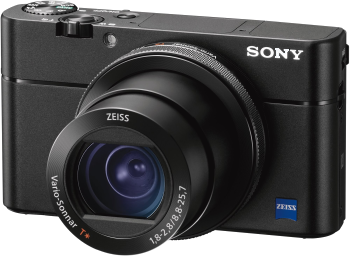
Focal distance: | min. 24mm, max. 70mm | |
Aperture: | min. f1.8, max f2.8 | |
Display diagonal: | 2.95" | |
Sensor size: | 1" (0.52 x 0.35") |
Maximum ISO: | 12,800 | |
Maximum Video Resolution: | UltraHD (3840 × 2160) | |
Battery life: | 220 shots | |
Advanced Features: | flash shoe |

Compact with SLR performance
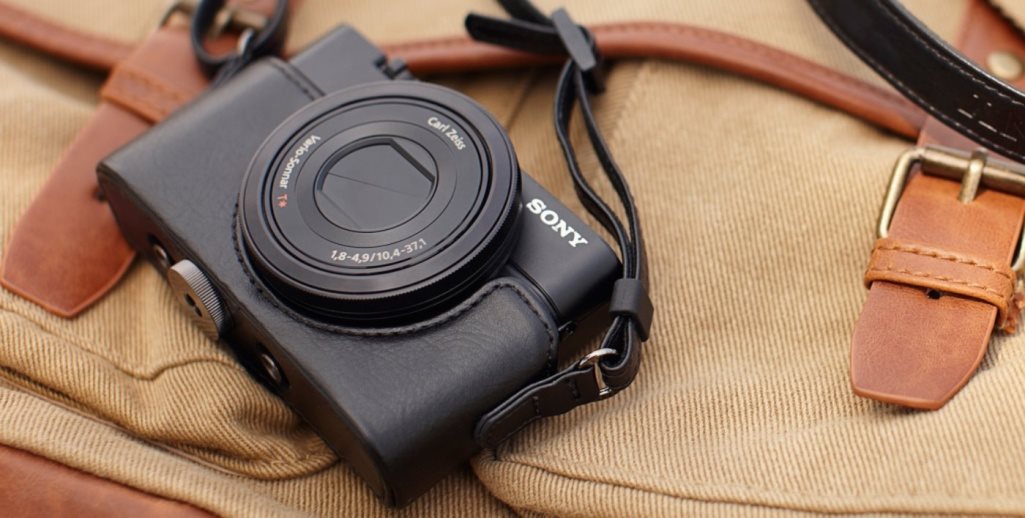
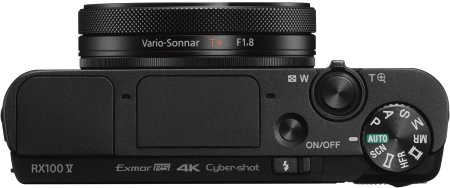
This 5th generation RX-100 offers a top-of-the-line sensor, high-end optics, and autofocus in just 0.05sec. Using the lens ring dial, you can quickly adjust the settings to capture the perfect image in any situation.
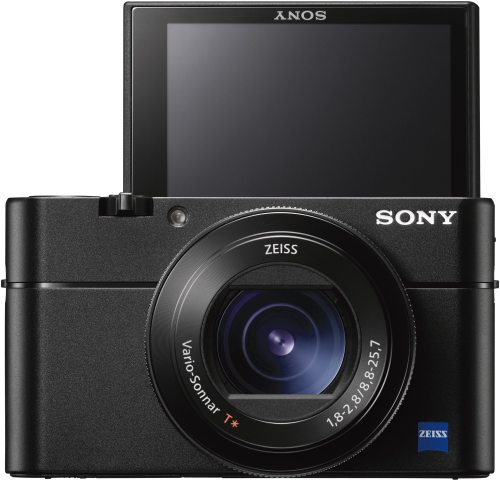
For more versatile control, you can unlock the 2.95" display (which is great for selfies), and use the OLED Tru-Finder viewfinder as a handy viewer for all settings and to immediately review your images.
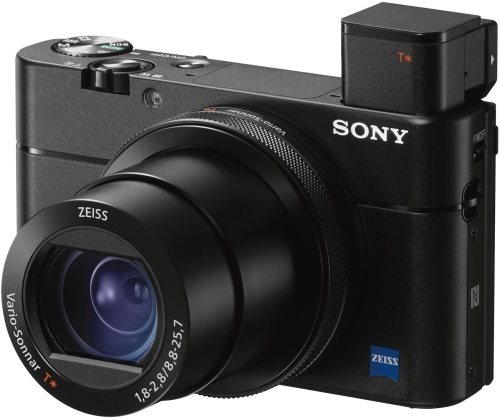
With the BIONZ X processor, photography and movies will look more realistic, with more detail, richer tonal gradation and lower noise. Exmor's advanced CMOS sensor is renowned for its performance even in low light levels.
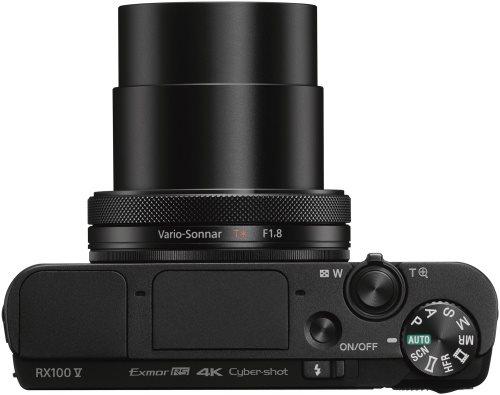
With powerful electronics, the camera is capable of shooting video up to 4K Ultra HD and up to 1000 fps. You can see the action in slow motion without missing even the tiniest detail.
Take pictures in a variety of situations using the Zeiss Vario-Sonar lens. The lens has a very short focal length for widescreen shooting, but you can also zoom in with it.
| Code: | OS061x9c |
| Links: | Producer's Website: |
| Manufacturer information |
Sony Corporation is a Japanese company founded in 1946. Its headquarters is located in Tokyo. Its beginnings were humble. The first product sold under the Sony brand was a transistor radio. It was those radios that played a pivotal role in the company's expansion in the 1960s and the world quickly began to associate Sony products with a reliably stellar price-performance ratio. In the 1970s, Sony was severely affected by the global economic crisis. Many analysts considered the company effectively defunct and could see no future for it. However, they underestimated the famous Japanese perseverance and courage. The crisis was not a disaster for Sony; on the contrary, it served as a launching pad to even greater heights. The company recovered and soon changed the media landscape with the development of the CD and later the DVD. In the early 1990s, Sony achieved another major success with the introduction of the PlayStation gaming console. It is the gaming consoles that best represent the intersection of the three key areas in which the company operates today – electronics, video games, and the entertainment industry. 
|